Spirituality: A Source of Hope, Never Control
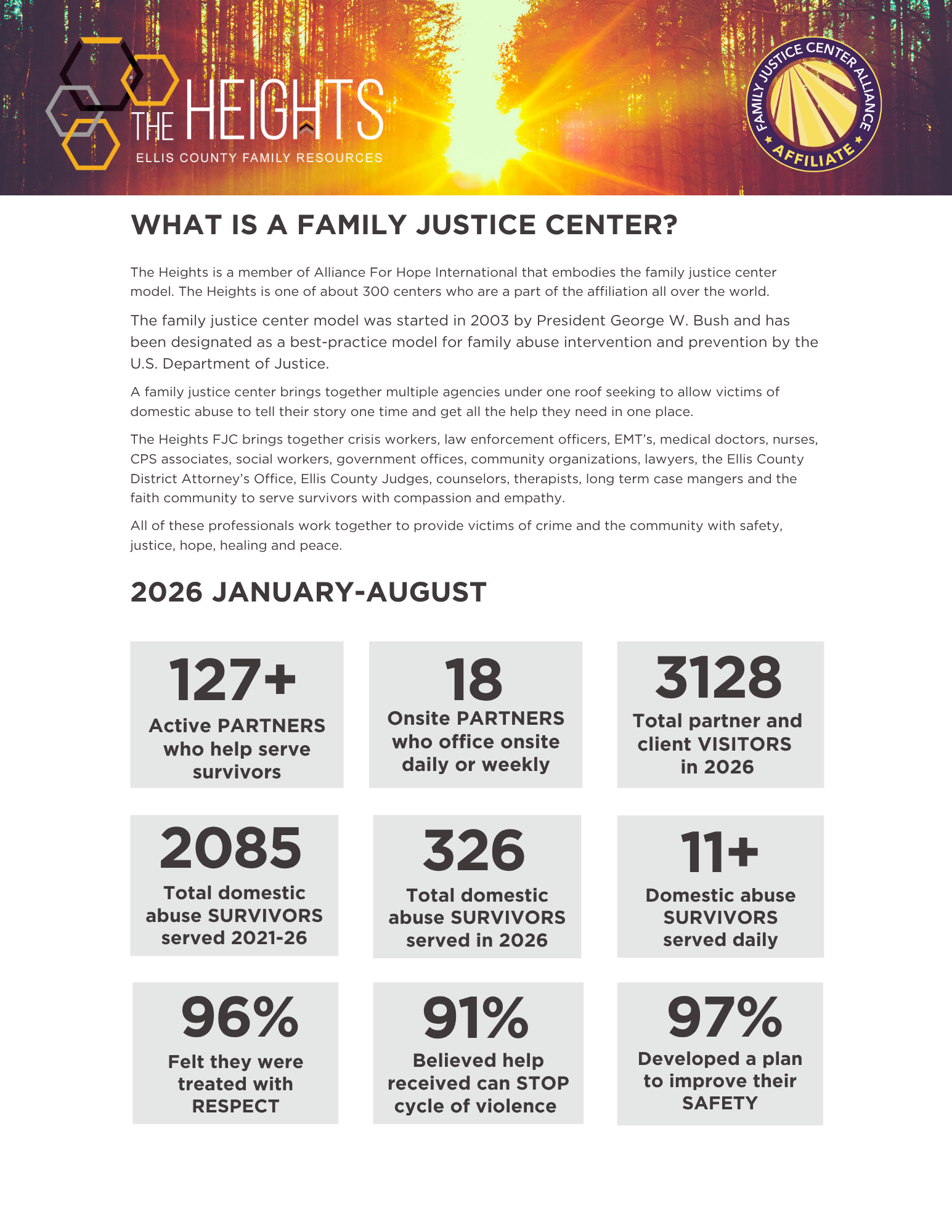
This month, our core value is Spirituality, and there may be no value more closely connected to the foundation of who we are at The Heights. Spirituality at The Heights is defined as drawing on spiritual resources and principles to provide comfort, guidance, and strength to individuals and families navigating the challenges of domestic abuse, while respecting their religious beliefs and cultural practices. We provide a safe, confidential, non-judgmental space for clients to talk through the realities of their situation and its impact on their emotions, relationships, and spirituality. We think of it as giving “human attention” and compassionate support to our clients motivated by love for Christ and the client.
The Heights was founded with Christian faith at its core. As the first and only faith-based Family Justice Center, spirituality is woven into the heart of our mission and our desire to walk alongside individuals and families as they move from crisis toward safety, stability, healing, and hope.
But being a faith-based organization also carries a tremendous responsibility.
One of the most challenging intersections we encounter in this work is the intersection between faith systems and spiritual abuse. When we think about domestic violence and abuse, we often think first about physical violence, emotional abuse, financial control, threats, intimidation, or isolation. Spiritual abuse is discussed far less often. Yet in communities where faith systems play a significant role in family and community life, spirituality can unfortunately be manipulated and used as another means of exercising power and control.
Spiritual abuse exerts authoritarian control, uses shaming and fear tactics, silences questions as doubt, isolates from helpful spiritual relationships, and even exploits under the guise of religion. A survivor may be told, or personally internalize, that leaving an abusive relationship is sinful. In a Christian marriage (most commonly seen in our context), scripture may be taken out of context to demand submission or silence. A person may be made to believe that suffering is simply something they are expected to endure. There can be fear of rejection from the local church, family, or faith community. In other situations, an abuser may portray themselves as the spiritual authority in the home and use that position to justify controlling behavior. All of these ideas need to be seen through the reality of intimate partner homicides. We would never want to have a survivor of domestic abuse stay in a situation because of spiritual force that could cost them their life.
When something that should provide hope, belonging, comfort, and connection to faith instead becomes a source of fear, shame, or control, tremendous harm can occur. Spiritual abuse violates the God-given dignity of the victim. .
At its core, domestic abuse is about power and control. Because of that, we must be intentional in ensuring spiritual care providers do not become another source of power or control over the people we serve. Trauma-informed spiritual care requires humility. Our chaplains listen to understand the client’s spiritual orientation, values, and beliefs, getting in step with their personal faith journey. This is critical in an increasingly diverse society where multicultural competence is required. Inquiry and understanding come before anything is addressed. This requires an environment of honesty and trust in which the client feels safe. Building this trust takes time and is called the working alliance. The way this is typically accomplished is through a spiritual screening, history and assessment; essentially chaplains learn the client’s story. We seek to honor a client’s faith system even if they are a part of a religion other than Christianity. Respecting a person involves respecting their choices even if we do not align with them.
Spiritual support is then carefully and sensitively offered without imposition. We can pray with someone who desires prayer while respecting the person who is not ready for it. We can provide opportunities for spiritual connection without making participation an expectation of receiving services. We can listen without judgment when someone's experience with faith has been complicated or painful. And we can recognize that rebuilding trust in a church or a faith community of their choosing may look very different for every survivor.
Our role is not to dictate or drive someone's spiritual journey. Our role is to empower clients in their religious beliefs and practices, to create a safe place where healing can occur. That distinction is incredibly important.
At The Heights, spirituality points toward hope, dignity, freedom, compassion, and restoration. Spirituality empowers and listens with cultural and spiritual sensitivity. It reminds the people we serve that they have value, that their voice matters, and that abuse is never justified by faith.
As we reflect on spirituality this month, we are reminded that this is the firm foundation of our organization and there is a profound responsibility that comes with it. May every client who comes to The Heights be treated with the dignity and respect they deserve as a child of God. May every client receive empowering and spiritually sensitive care. May our own spirituality move us towards greater compassion, humility, service and love for the oppressed. Spirituality at The Heights is always about HOPE!